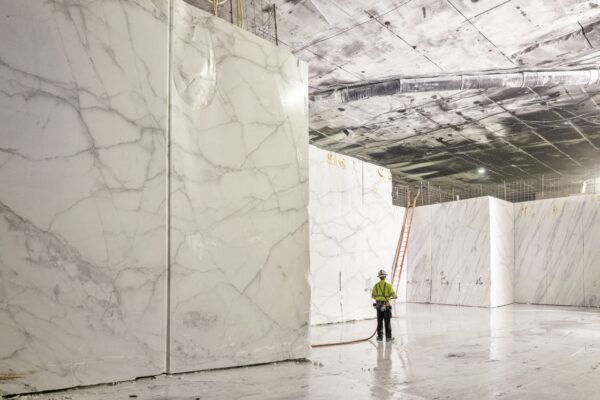
The history of the Yule Marble quarry in Colorado is a story of ambitious development, significant national contracts, and repeated economic struggle, all centered around a deposit of 99.5% pure calcite—one of the purest marbles ever quarried.
Here is a summary of its history, based on information from the Wikipedia article “Yule Marble”:
Discovery and Early Attempts (1873–1905)
- Discovery: The Yule Marble deposit was first discovered around 1873 in the Crystal River Valley by prospectors who were originally searching for gold and silver. The town of Marble, Colorado, was established near the site.
- Commercial Interest: The marble gained wider recognition and commercial viability after it was exhibited at the 1893 World Columbian Exposition in Chicago.
- Early Failures: Several companies were formed in the late 1800s and early 1900s to develop the quarry, including Colorado Marble and Mining and the Crystal Land and Development. However, due to lack of capital, difficult transportation, and other financial issues, these early ventures all went out of business.
The Boom Years (1905–1917)
-
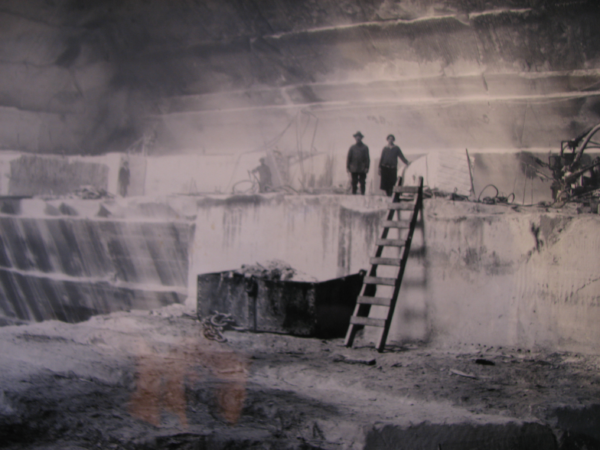
Major Investment: The modern quarry operation began in earnest in 1905 with the formation of the Colorado Yule Marble Company (CYMC). Colonel Channing Meek secured a large amount of funding, reportedly with assistance from the Rockefeller family, to develop the quarry and its infrastructure.
-
Overcoming Transportation: To solve the major challenge of moving the massive stone blocks out of the remote valley, the company built the Crystal River & San Juan Railway (CR&SJ), which connected Marble to the main railway lines at Placita by 1906.
-
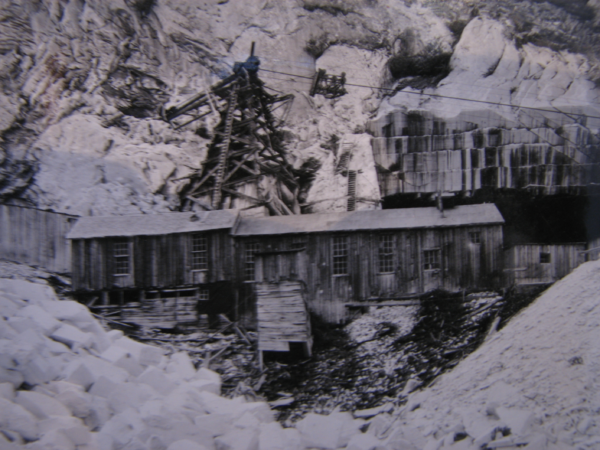
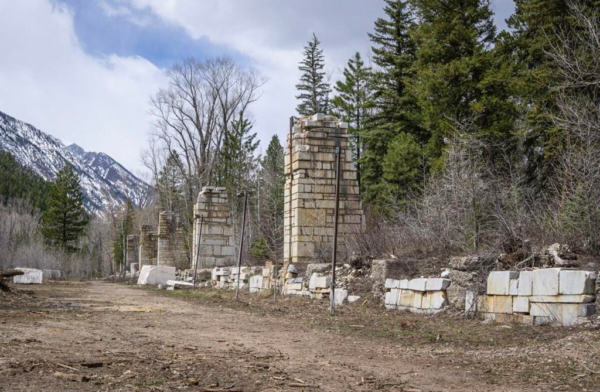
Infrastructure: The CYMC built an expansive finishing mill, which was so large it was claimed to be the biggest building in the world under one roof at the time (measuring 150 by 1,700 feet). They also established an internal tramway system to the quarry, which is located at an elevation of 9,500 feet inside Treasure Mountain.
-
Town Peak: The town of Marble flourished during this era, reaching its peak population of between 1,500 and 4,000 residents around 1915, many of whom were skilled Italian marble workers who immigrated to the area.
-
Disaster and Setback: In 1912, the massive mill was destroyed by a snow slide, and Colonel Channing Meek was killed in a transportation accident, dealing a significant blow to the operation.
Legacy and Decline (1917–1990)
-
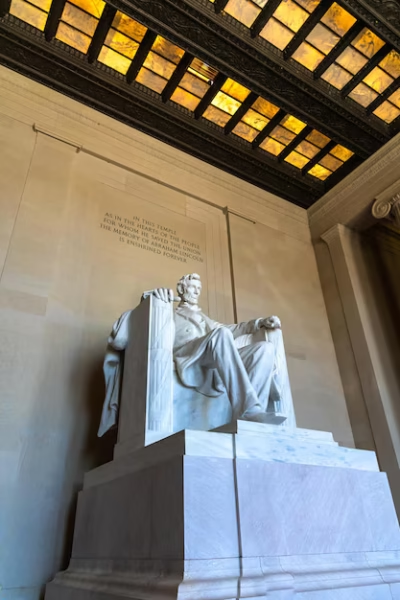
National Monuments: Despite its operational challenges, the quarry gained nationwide fame for supplying the marble for some of America’s most recognizable monuments, including:
-
The exterior of the Lincoln Memorial in Washington, D.C.
-
The Tomb of the Unknown Soldier at Arlington National Cemetery. For the tomb, Yule Marble was the only quarry capable of providing a single, flawless 56-ton block, which was the largest single piece of marble ever quarried at that time.
-
-
-
World War I Collapse: The market for luxury stone collapsed with the onset of World War I. Operations were greatly reduced in 1917, and the last train left Marble in 1918.
-
The Bust: The company struggled through the 1920s and 1930s, though there was a brief increase in activity, but World War II brought the original CYMC operation to an end around 1941. The fabricating plant was stripped for scrap steel, and the town of Marble essentially became a ghost town.
-
Photo courtesy of Colorado Stone Quarries
Modern Revival (1990–Present)
-
-
Sporadic Activity: The quarry has never regained its initial profitability and has been characterized by intermittent operation, numerous closures, and changes in ownership since World War II.
-
-
-
Acquisitions: The quarry was briefly revived in 1990 and again in 1999 by Sierra Minerals Corporation. In 2004, the quarry was acquired by Polycor, the second-largest stone company in North America, which has maintained the North American sales rights.
-
-
-
State Recognition: Also in 2004, Yule Marble was officially designated the State Rock of Colorado.
-
-
-
Contemporary Role: The quarry continues to operate today, supplying high-quality American marble. In the 2000s, it produced a new, perfect block of marble intended to replace the original Tomb of the Unknown Soldier block after a crack was discovered. The site remains a working quarry.
-
Sources
www.chemeurope.com
Yule Marble – chemeurope.com
www.marbleandgranite.com
Marble in America: Colorado’s Yule Creek Quarry
en.wikipedia.org
Yule Marble – Wikipedia
www.uncovercolorado.com
Yule Marble Quarry – Marble, CO – Uncover Colorado
www.coloradostonequarries.com
History – Colorado – Stone Quarries