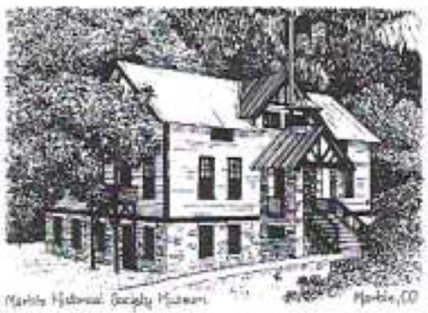
Marble Schoolhouse Restoration Project
| Feature | Details |
| Original Construction | 1910 (Opened January 1911) |
| Architectural Style | Two-story Italianate-style frame building |
| Historic Status | National Register of Historic Places (Added 1989) |
| Primary Use | Museum, community hall, and town administrative space |
| Restoration Lead | Marble Historical Society |
| Key Renovations | Foundation stabilization, roof replacement, interior gallery updates |
| Current Owner | Gunnison Watershed School District |
| Notable Features | Original belfry, period-accurate classrooms, and local marble artifacts |
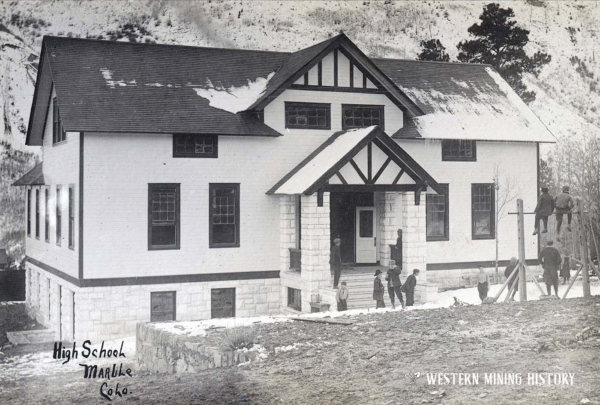
The history of the Marble School House (historically known as the Marble High School) is a reflection of the boom-and-bust cycles of the Yule Marble industry in Marble, Colorado. Built between 1910 and 1912, the structure was commissioned during a period of rapid growth when the Colorado-Yule Marble Company’s operations expanded, driving the town’s population to over 1,500 residents.
Architecture and Unique Construction
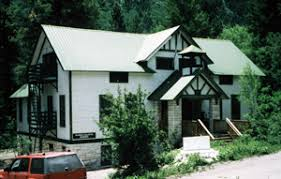
The school is architecturally significant as the only surviving building in the town to incorporate local Yule Marble in its construction. It features:
Materials: A raised marble foundation and distinctive “elephantine” marble porch piers.
Style: A two-story, wood-frame building with Craftsman-style influences, including overhanging eaves and nine-over-one windows.
Colors: Traditionally painted white with green trim, matching the official colors of the Colorado-Yule Marble Company, which originally donated the paint.
A Melting Pot of Education
Because many of the town’s skilled marble workers were immigrants from Italy, the school’s early curriculum was unique. The first teacher, A.R. Ambrosini, was an Italian immigrant, and many classes were taught in both English and Italian. In addition to standard academic subjects, students were trained in skills relevant to the local industry, such as mechanical drawing, architectural design, and sculpting. At its peak in the 1920s and 30s, the school housed up to 200 students.
Decline and Closure
The town’s prosperity faded as the demand for marble plummeted during World War I and again during World War II. After a series of devastating floods in the 1940s and the departure of most residents, enrollment dwindled to just a few students. The Gunnison Watershed School District officially closed the school in 1948, and the building sat abandoned and shuttered for several decades.
Preservation and the Modern Era
In 1985, the Marble Historical Society acquired the deed to the building and began an extensive restoration to save the landmark from decay. They transformed the interior into the Marble Historical Museum, which today houses artifacts, photographs, and historical documents from the town’s quarrying heyday.
A new chapter began in 1995 when local parents, seeking to avoid a long daily bus commute for their children, established the Marble Charter School. The school now leases space from the Historical Society, meaning the building has returned to its original purpose. This unique partnership allows the historic structure to serve as both a K-8 educational facility and a repository for the town’s history.